A Long Form Content on Short Form Content
(Note: When I say short-form, it means status updates, short news, reels, short videos, snippets, etc.)
Back in 2015, I, along with a team of five, was running a 24x7 short news product called ‘Tamil Flash News’. It was a hyperlocal news product powered by user generated content. Every contribution was fact-checked and published by us. We purposefully kept things ‘light’ without making the user feel like a ‘citizen journalist’. Forcing intentions through product design is a friction in itself!
Around 60% of the contributions were WhatsApp forwards. The rest are extremely hyperlocal civic issues: damaged drainage holes, broken bridge walls, dilapidated bus stops, local politics etc. So, many government officials and politicians were also reading TFN.
The Power of Short Form Content
Newspapers had hyperlocal content but desked them in a corner of a city page. In the TFN app, a news about a broken street light is treated with the same importance as the Prime Minister’s surprise demonetization announcement, both communicated with equal prominence to users.
I remember a contribution from a local reporter about a damaged bridge near Cuddalore in TN. The bridge wasn’t well-lit at night, becoming a safety hazard. He filed a short news piece with a pic. We verified and published it. The news went viral in local WhatsApp groups and reached the relevant government officials. The bridge was fixed the next day. Short-form content can create impact when presented with the right context.
How Short Form Content Can Help During Crisis Situations?
During the 2015 Chennai Floods, UGC submissions in the TFN app peaked. Social media played a major part in the rescue, but it also meant that many voices got mixed and forgotten in the noise. But, they got prominence in TFN. 99% of our short news was about the flood. The content wasn’t even what legacy publishers would call ‘news’. But it was ‘NEWS’ for the affected people.
One such example is when an NRI woman filed a news piece with a GPS location and a Google Maps pic of her home in Chennai. Her grandmother was stuck in her home all alone with water rising every hour. This woman abroad, wanting to rescue her grandma, was only getting more scared from TV news. Luckily, she was a TFN reader. We verified her submission, published it, and moved on. There were more than 150 such submissions every day during the floods.
I remember people filing submissions with information about the available quantity of food and shelter and offered to help. We published such content too. To what extent it all helped, we weren’t able to ‘measure’. The one thing we came to know later was that the grandma was rescued because of that one short news. Good things!
The ‘Reel’ Effect
Now, the abundance of short-form content is drowning our brains in cognitive overload. I think the more people consume short form content, the more impatient they become in their daily lives.
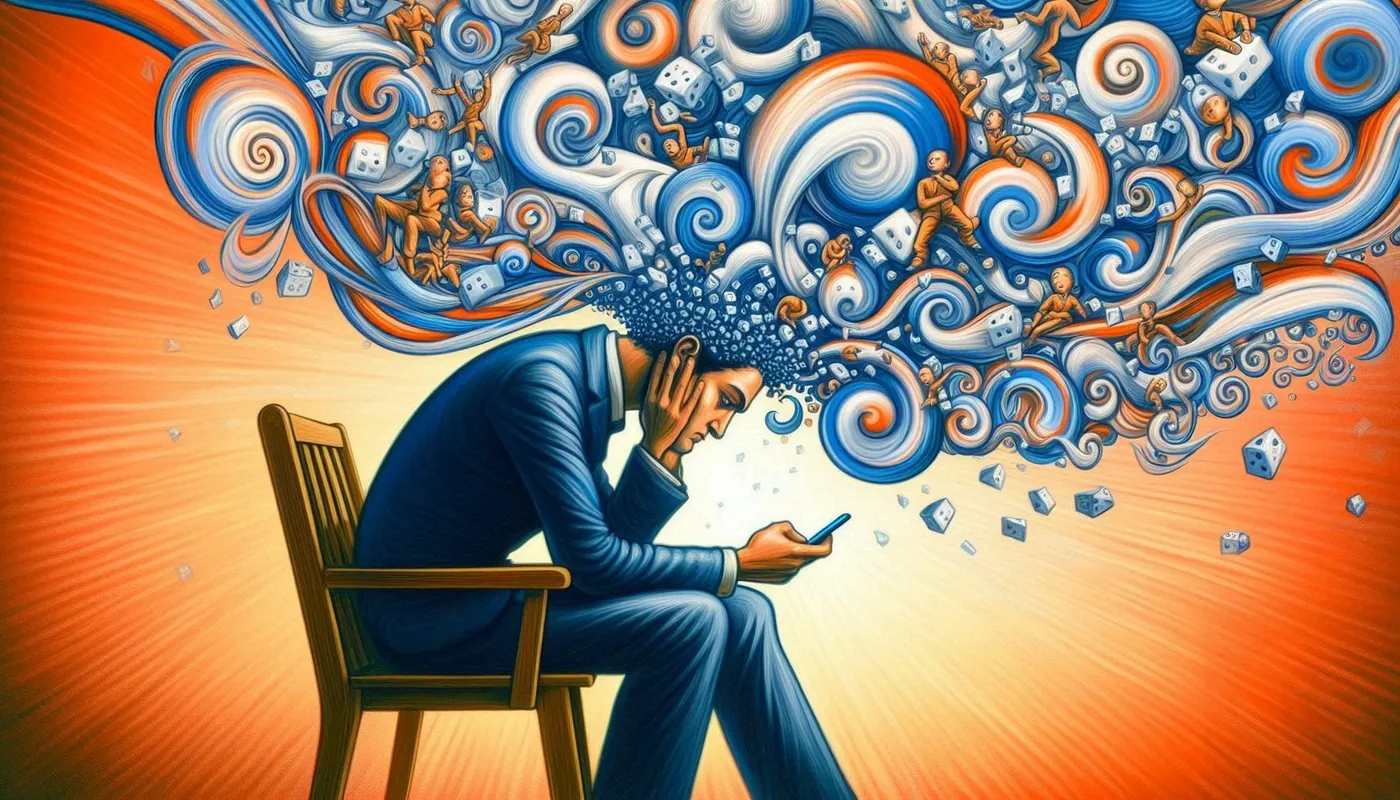
Salvador Dali Style: A person watching smartphone looking drained with cognitive overload, while the short form content in social media is depicted as tiny figures, swirls around them. The subject should be at the center. Image should be minimalistic.
There must be some correlation between the consumption of short forms and how it affects daily habits like driving, watching a movie, etc. Everyone calls every movie ‘dragging’ and ‘slow’. I think today’s movie criticism says more about how our ‘perception’ has changed than about the movies themselves.
The problem is not the short-form content. It’s the way algorithms distribute it to us, and how we consume it. The lack of ‘mindfulness’ on both sides is astounding. It’s scary to think about the long-term effects. The ‘mindful’ ones will become powerful human beings in the future. The good ones among these will be the bridge of wisdom to the next generations. The bad ones will become the ‘Goebbels’ of the information ecosystem and manipulate the masses.
‘Everything that irritates us about others can lead us to an understanding of ourselves’
Carl Jung
I am writing about this because I observed how consuming short-form content for a long period of time can drain my brain. I see people swiping and swiping, and it irritates me because I can see myself in them.
Long-Form is the Future
The volume of short form content could indirectly boost the value of long-form content. I keep seeing discussions about people wanting to read more long forms to understand things better.
Short forms ‘inform’ people but they don’t help to ‘make sense’. The human brain loves connecting the dots. This is why I am very bullish on long-form journalism products like Frontline. It’s a very promising product for the ‘future’. News is everywhere, but it’s not being meaningful. That’s why we have the likes of Elon Musk pushing ‘X’ as a news product. We all know it can be, but it shouldn’t be.
Products like Frontline will become essential to understand the undertones of daily news. With Gen AI being a promising candidate to take on our mundane*(even creative!)* tasks, the collective unconscious of society will increasingly prioritize first principles and second-order consequences. This means people will want to read more deeply to understand things better from a ‘fundamental’ sense. We need to help their intuition to figure out: 'If this has occurred in the past and is happening now, what might transpire in the future?' I want products like Frontline to stand right here and be the solution. No short news product can solve this problem.
Short forms do have their place. But, the human brain can’t afford the cognitive overload (Now, don’t fall into the trap of ‘self-care’ reels!)
As for long-form content, I believe it shouldn't be a ‘privilege’; it should be accessible to everyone at a highly affordable cost.
P.S. We think the world is simple like a three-minute pop song. I think it’s more of a 15-minute long ‘Dream Theater’ composition.
And, I am just here writing for absolution… to understand everything 1% better.
Alexa, play Muse’s ‘Sing for Absolution’.